A car key battery dying is one of those small problems that turns into a big headache when you least expect it. One minute your remote works fine, the next you’re standing beside your car pressing the button like it owes you money. From years of working alongside an auto car locksmith, I can tell you this: more than half of “broken key” service calls are just dead batteries.
This guide walks you through the process slowly and clearly, so even if you’ve never opened a key fob before, you’ll know exactly what to do—and when it’s time to stop and call a professional.
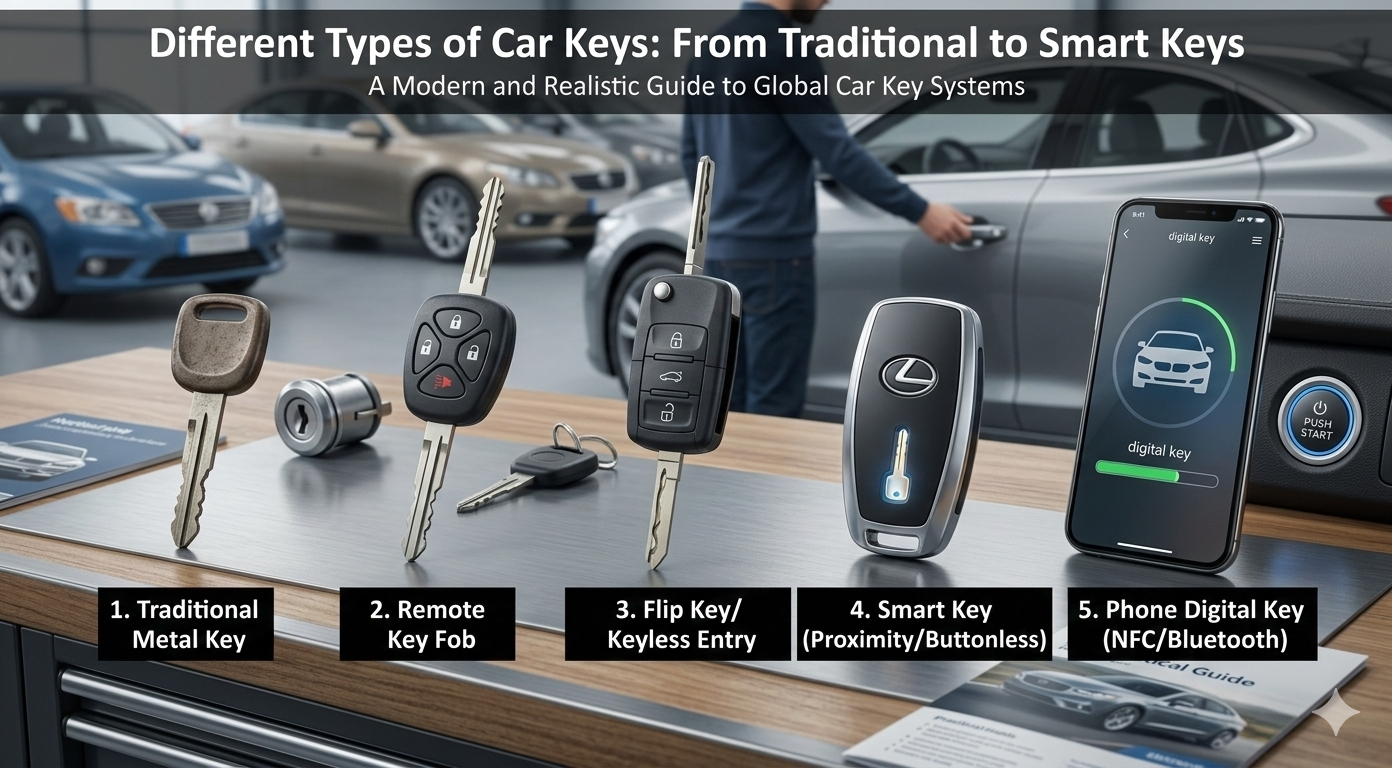
Understanding the Different Types of Car Keys
Not all car keys are built the same, and treating them like they are is how people end up breaking clips, cracking casings, or damaging internal chips.
Traditional Remote Key (Standard Key Fob)
This is the classic remote with physical buttons for lock, unlock, and trunk.
- Common in vehicles from the early 2000s onward
- Uses minimal power and has longer battery life
- Internal design is simple and forgiving
Most standard remotes are the easiest to open and safest for DIY battery replacement. This is the key type most car auto locksmith technicians recommend people handle themselves.
Complete Auto Locksmith Services Guide: From Car Key Replacement to Ignition Repair
Smart Key / Proximity Key
Smart keys communicate constantly with your vehicle, even when you’re not pressing buttons.
- Used in push-to-start cars
- Battery drains faster due to constant signal exchange
- Key doesn’t need to be inserted to start the vehicle
Drivers often panic when a smart key stops working and assume they need car key programming. In reality, 9 out of 10 times, it’s just the battery.
Flip Key (Switchblade Key)
Flip keys fold into themselves and are more compact—but also more fragile.
- Battery sits deeper inside
- Springs and clips can be damaged if forced
- Requires slow, controlled opening
This is where many drivers cause accidental damage and later need car key replacement when it could have been avoided.
Clear Warning Signs Your Car Key Battery Is Dying
Car key batteries don’t usually fail instantly. They weaken over time and give subtle signs that are easy to ignore.
Common early warnings include:
- Unlocking works only when you’re very close to the car
- Buttons respond inconsistently
- The car unlocks but won’t start on the first try
- Dashboard alerts mentioning “Key Battery Low”
- Needing multiple presses for one action
In colder cities like Montreal, these symptoms appear faster. That’s why Car Key Montreal technicians see battery-related issues spike during winter.
What You’ll Need (And What You Absolutely Don’t)
You don’t need special equipment or technical skills.
What you do need:
- Correct battery model (CR2032 and CR2025 are most common)
- Small flathead screwdriver or plastic pry tool
- Clean hands or cloth
What you don’t need:
- Programming tools
- Replacement key
- Locksmith visit (unless something goes wrong)
Avoid knives, scissors, or forceful tools. Most broken keys come from impatience, not complexity.
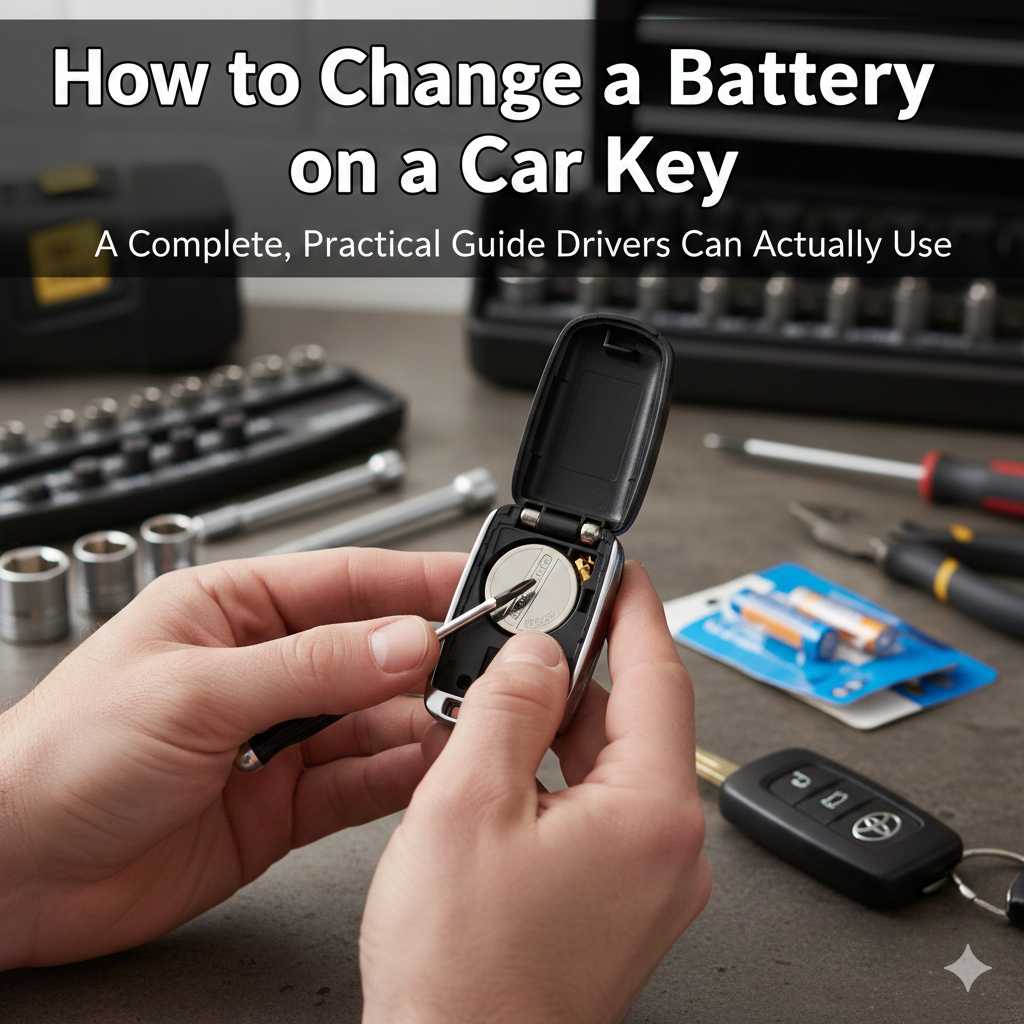
Step-by-Step: How to Change a Car Key Battery Properly
Step 1: Identify the Exact Battery Type
Look inside the key casing or check the owner’s manual. Never guess.
Using the wrong battery can:
- Prevent proper contact
- Cause rapid battery drain
- Trigger false “key not detected” errors
If you’re unsure, any auto car locksmith can identify the correct battery in seconds.
Step 2: Open the Key Without Damaging It
Find the small groove or seam along the key.
- Insert the tool gently
- Apply light twisting pressure
- Let the casing separate naturally
If it doesn’t open easily, stop. Forcing it can break plastic clips that cannot be repaired.
Step 3: Remove the Old Battery Carefully
Pay close attention to orientation.
- Note which side faces up
- Avoid touching metal contacts
- Don’t bend internal components
This is especially important for smart keys, where internal parts are more compact.
Step 4: Install the New Battery Correctly
Place the new battery exactly as the old one sat.
- Press lightly until secure
- Ensure it sits flat
- Avoid fingerprints on the surface
Poor contact is a common reason keys “half work” after replacement.
Step 5: Reassemble and Test Immediately
Snap the casing back together firmly but gently.
Test:
- Lock and unlock
- Trunk button
- Push-to-start function
If it works instantly, you’re done.
Do You Need Car Key Programming After Battery Replacement?
Almost never.
Battery replacement does not erase:
- Transponder data
- Immobilizer pairing
- Remote programming
You only need car key programming if:
- The key was already malfunctioning
- Internal electronics were damaged
- The car no longer recognizes the transponder
This is where professionals step in—not for battery changes, but for electronic faults.
Common Mistakes That Lead to Unnecessary Locksmith Calls
Over the years, these mistakes come up repeatedly:
- Buying the cheapest battery available
- Mixing old and new batteries between spare keys
- Installing the battery upside down
- Breaking clips while opening
- Assuming the key needs key Duplication immediately
Battery failure is simple. Panic makes it expensive.
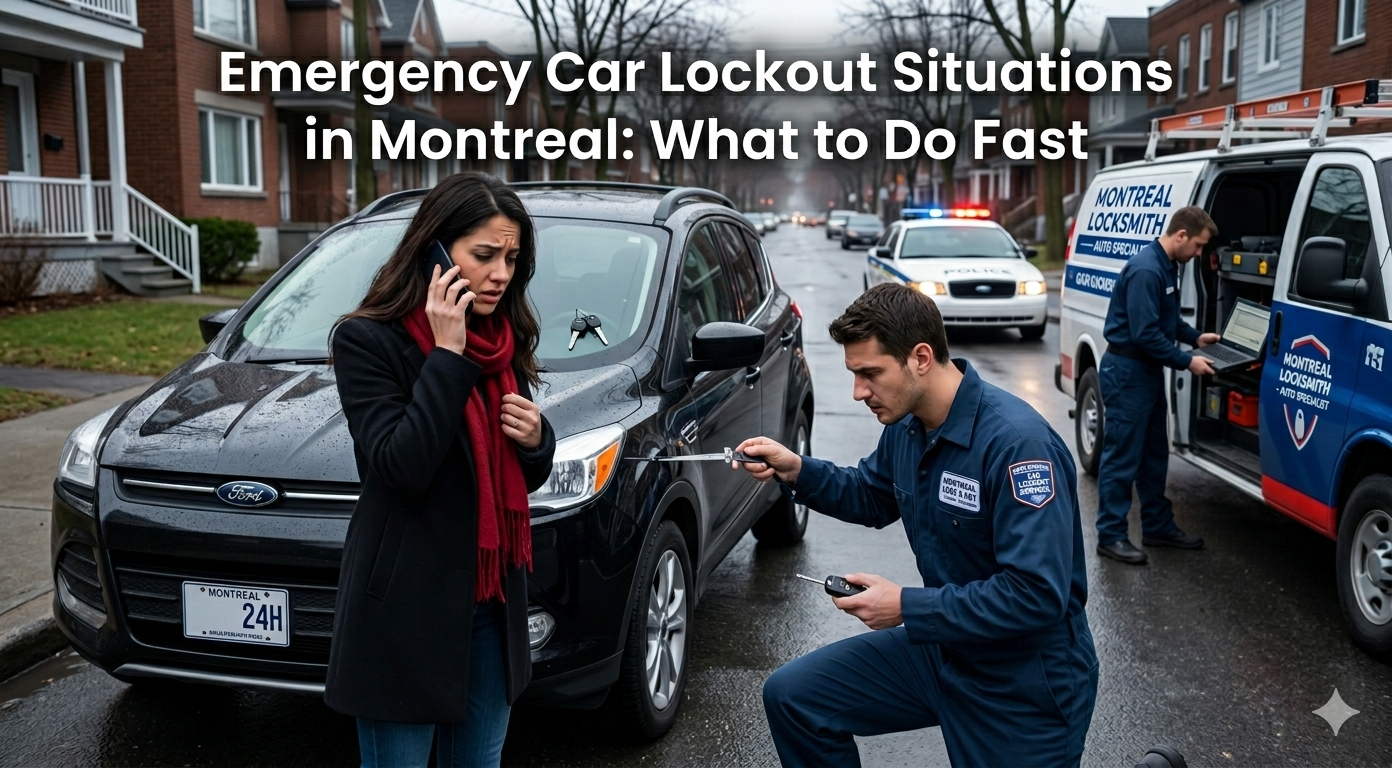
How to Unlock a Car Door Without a Locksmith: What You Can Try
How Long a Car Key Battery Really Lasts
Battery life varies based on usage and environment.
Average lifespan:
- Standard remote: 2–3 years
- Smart key: 1–2 years
Factors that shorten life:
- Cold weather
- Frequent button use
- Leaving keys near the vehicle overnight
Keeping a spare battery at home can save you an emergency call later.
When It’s Time to Call an Auto Car Locksmith
You should contact a professional if:
- The key casing cracks or won’t close
- The key doesn’t work after battery replacement
- The transponder chip is damaged or loose
- You’ve lost all working keys
At that point, you may need car key replacement, key Duplication, or advanced diagnostics—not just a new battery.
Frequently Asked Questions Drivers Actually Ask
Can a dead key battery leave me stranded?
Usually no. Most cars allow manual start methods.
Will changing the battery erase my key data?
No. The chip retains all information.
Is it cheaper to replace the battery myself?
Yes—by a huge margin.
When should I replace the battery proactively?
Every 18–24 months, even if it still works.
Final Thoughts
Changing a car key battery is one of the easiest car maintenance tasks—but only if it’s done correctly. Understanding your key type, using the right battery, and avoiding force can save you from unnecessary car key replacement or emergency locksmith calls.
Before assuming your key is broken or needs key Duplication, start with the basics. And when the problem goes beyond the battery, a trusted auto car locksmith—especially in areas like Car Key Montreal Company—can handle the rest safely and professionally.